自定义ql
自定义ql
谓词
与函数有所区别,谓词用于描述构成 QL 程序的逻辑关系, 严格来说,谓词的计算结果为一组元组,如:
(1)一元组
predicate isCountry(string country) {
  country = "Germany"
  or
  country = "Belgium"
  or
  country = "France"
}
(2)二元组
predicate hasCapital(string country, string capital) {
  country = "Belgium" and capital = "Brussels"
  or
  country = "Germany" and capital = "Berlin"
  or
  country = "France" and capital = "Paris"
}
谓词定义
谓词大致可分为两种:
-
不带结果的谓词,如
predicate isSmall(int i) { i in [1 .. 9] } -
带结果的谓词
int getSuccessor(int i) {
  result = i + 1 and
  i in [1 .. 9]
}
result是一个关键字,而且,result并不局限于在等式左边,如:
Person getAChildOf(Person p) {
  p = getAParentOf(result)
}
result为p的子类。result也可以定义元组中单个值的结果,如:
string getANeighbor(string country) {
  country = "France" and result = "Belgium"
  or
  country = "France" and result = "Germany"
  or
  country = "Germany" and result = "Austria"
  or
  country = "Germany" and result = "Belgium"
}

select getANeighbor("France")
最后将会返回 Belgium和Germany
对于无结果的谓词可以这样使用:
import java // 根据目标语言调整
predicate isSmall(int i) {
  i in [1 .. 9]
}
from int i
where isSmall(i)
select i //
最后会返回所有1-9的整数,而对于有结果的谓词在where会提示需要一个无结果的谓词
谓词递归
string getANeighbor(string country) {
  country = "France" and result = "Belgium"
  or
  country = "France" and result = "Germany"
  or
  country = "Germany" and result = "Austria"
  or
  country = "Germany" and result = "Belgium"
  or
  country = getANeighbor(result)
}
select getANeighbor("Austria")
最后得到结果为Germany
谓词种类
谓词还可以分为三种:
-
非成员谓词:独立定义,不属于任何类
-
特征谓词:在类的内部定义,类似构造函数,定义具体的成员,成员类型取决于extends的类型,此处是int类型
class FavoriteNumbers extends int {
  FavoriteNumbers() {
    this = 1 or
    this = 4 or
    this = 9
  }
}

from FavoriteNumbers n
select n
返回1、4、9
-
成员谓词:在类的内部定义,定义了以下谓词:
class FavoriteNumbers extends int {
  FavoriteNumbers() {
    this = 1 or
    this = 4 or
    this = 9
  }
  string getName() {
    this = 1 and result = "one"
    or
    this = 4 and result = "four"
    or
    this = 9 and result = "nine"
  }
}

from FavoriteNumbers n
select n.getName()
最后返回one、four、nine,由此可以看出成员谓词更像是用于对类成员进行一定转换
注意,谓词中的元素不能是无限的,除非在外部使用该谓词时做了范围限制,且要使用bindingset做声明,比如:
bindingset[i]
int multiplyBy4(int i) {
  result = i * 4
}

from int i
where i in [1 .. 10]
select multiplyBy4(i)
查询
CodeQl包含两种查询:
- 警报查询 (problem):突出显示代码中特定位置的问题的查询。
- 路径查询 (path-problem):描述代码中源和接收器之间的信息流的查询。
这需要在编写好的ql文件的元数据中指定(这非常重要):
/**
 * @name 原生sql注入
 * @description 使用jdbc进行sql语句的执行,由于构造sql时传入不可信数据导致问题存在.
 * @kind path-problem
 * @id java/sqli-jdbc
 * @problem.severity error
 * @security-severity 7.5
 * @precision high
 * @tags security
 */
一般的查询就是select或from+where+select,可以通过as关键字指定列名:
from int x, int y
where x = 3 and y in [0 .. 2]
select x, y, x * y as product
| x | y | product |
|---|---|---|
| 3 | 0 | 0 |
| 3 | 1 | 3 |
| 3 | 2 | 6 |
通过desc或asc关键字按列排序:
from int x, int y
where x = 3 and y in [0 .. 2]
select x, y, x * y as product order by y asc
但除此之外,还有一个查询谓词
query int getProduct(int x, int y) {
  x = 3 and
  y in [0 .. 2] and
  result = x * y
}
最后返回一个
| x | y | result |
|---|---|---|
| 3 | 0 | 0 |
| 3 | 1 | 3 |
| 3 | 2 | 6 |
查询谓词同样可以在类中使用以定义成员:
query int getProduct(int x, int y) {
  x = 3 and
  y in [0 .. 2] and
  result = x * y
}

class MultipleOfThree extends int {
  MultipleOfThree() { this = getProduct(_, _) }
}

from MultipleOfThree m
select m
最后返回的实际上是getProduct的result
类型
QL中,每个变量必须有类型声明,这些类型分为原始类型和自定义类型。
-
原始类型包括float、boolean、int、string、date(日期)
-
自定义类型一般由以下部分组成
- 成员谓词
- 特征谓词(类似构造函数)
- 字段
如:
class SmallInt extends int {
  SmallInt() { this = [1 .. 10] }
}

class DivisibleInt extends SmallInt {
  SmallInt divisor;   //字段
  DivisibleInt() { this % divisor = 0 }//特征谓词

  SmallInt getADivisor() { result = divisor }//成员谓词
}
from DivisibleInt i
select i, i.getADivisor()
继承使用extends
抽象类型
多重继承
class Two extends OneTwo, TwoThree {}
有关继承需要注意的是,当在同一文件内调用一个父类,其子类会自动被调用,如果子类存在问题,就会导致父类无法正常执行
拓展子类型
final class FinalOneTwoThree = OneTwoThree;
在继承该类型后,无法通过override覆写成员谓词
非拓展子类型
class Bar instanceof Foo {
  string toString() { result = super.fooMethod() }
}
通过instanceof声明为Foo的子类型,然后通过super调用父类的成员谓词
模块
模块的名称可以是任何标识符以大写或小写字母开头
显示定义模块
module Example {
  class OneTwoThree extends int {
    OneTwoThree() {
      this = 1 or this = 2 or this = 3
    }
  }
}
隐式定义模块
每个查询文件(扩展名 .ql)和库文件(扩展名 .qll)都隐式定义一个模块
导入模块
import <module_expression1> as <name>
import <module_expression2>
或者通过以下方式导入:
module Sets = QlBuiltins::InternSets<int, int, getAValue/1>;
内置模块QlBuiltins
- BigInt:任意范围证书
- InternSets:集合
- EquivalenceRelation:等价关系
签名
参数化模块使用签名作为其参数的类型系统。签名分为三类: 谓词签名 、 类型签名和模块签名 。
公式
-
比较
<expression> <operator> <expression>名字 operator 大于 >大于或等于 >=小于 <小于或等于 <= -
相等检查
要使用 = 比较两个表达式,至少其中一个表达式必须具有类型。如果两个表达式都有一个类型,则它们的类型必须兼容 。
要使用 != 比较两个表达式,两个表达式都必须具有类型。这些类型也必须兼容 。
-
类型检查
<expression> instanceof <type> -
范围检查
<expression> in <range> -
检查是否存在
exists(<variable declarations> | <formula>)如果不存在则是not exists
-
forall检查
forall(<variable declarations> | <formula 1> | <formula 2>)如果
< 公式 2>对< 公式 1>的所有值都成立,则它成立。 -
逻辑连接词
- Negation (not)
- Conditional formula (if … then … else)
- Conjunction (and)
- Disjunction (or)
- Implication (implies)
codeql java
适用于java和Kotlin的库
标准 Java/Kotlin 库中最重要的类可以分为五大类:
- 用于表示程序元素(例如类和方法)的类
- 用于表示 AST 节点的类(例如语句和表达式)
- 用于表示元数据(如注释和注释)的类
- 用于计算指标的类(例如圈复杂度和耦合)
- 用于导航程序调用图的类
程序元素
这些类表示命名的程序元素:包 (Package)、编译单元 (CompilationUnit)、类型 (Type)、方法 (Method)、构造函数 (Constructor) 和变量 (Variable)
类型
PrimitiveType表示一种原始类型 ,即boolean、byte、char、double、float、int、long、short之一;QL 还将void和<nulltype>(空文本的类型)分类为基元类型。RefType表示引用 (即非基元) 类型;它又有几个子类:-
Class表示 Java 类。Interface表示 Java 接口。EnumType表示 Java ` 枚举`类型。Array表示 Java 数组类型。
TopLevelType表示在编译单元的顶层声明的引用类型。NestedType是在另一个类型中声明的类型。
泛型
略
变量
Field 表示 Java 字段。
LocalVariableDecl 表示局部变量。
Parameter 表示方法或构造函数的参数。
AST
AST,抽象语法树,即语句(类 Stmt)和表达式(类 Expr)。
Expr 和 Stmt 都提供了用于探索程序的抽象语法树的成员谓词:
Expr.getAChildExpr返回给定表达式的子表达式。Stmt.getAChild返回直接嵌套在给定语句中的语句或表达式。Expr.getParent和Stmt.getParent返回 AST 节点的父节点。
语句通常不直接产生值,而表达式则会产生值
元数据
主要是注释,比如查看所有构造函数的Annotation注释
import java

from Constructor c
select c.getAnAnnotation()
查找所有私有字段的Javadoc注释:
import java

from Field f, Javadoc jdoc
where f.isPrivate() and
    jdoc = f.getDoc().getJavadoc()
select jdoc
度量
总共有六个这样的类:MetricElement、MetricPackage、MetricRefType、MetricField、MetricCallable 和 MetricStmt。每个相应的元素类都提供了一个成员谓词 getMetrics,该谓词可用于获取委托类的实例,然后可以在该实例上执行度量计算。
查找圈复杂度大于 40 的方法:
import java

from Method m, MetricCallable mc
where mc = m.getMetrics() and
    mc.getCyclomaticComplexity() > 40
select m
调用图
可以使用谓词 Call.getCallee 来找出特定调用表达式引用的方法或构造函数,比如:
import java

from Call c, Method m
where m = c.getCallee() and
    m.hasName("println")
select c
查询从未调用的方法和构造函数:
import java

from Callable c
where not exists(c.getAReference())
select c
数据流
数据流存在以下概念:
- source:输入节点
- sink:输出节点
- sanitizer:净化函数(全局数据流)
只有当source和sink同时存在,并且从source到sink的链路是通的,数据流才存在
本地数据流
本地数据流是单个方法或可调用范围内的数据流。
首先导入:
import semmle.code.java.dataflow.DataFlow
DataFlow 模块定义了 Node 类,表示数据可以流经的任何元素。 节点分为表达式节点 (ExprNode) 和参数节点 (ParameterNode)。通过成员谓词 asExpr 和 asParameter 可以获取当前节点的表达式和参数
全局数据流
通过实现特征 DataFlow::ConfigSig 并应用模块 DataFlow::Global<ConfigSig> 来使用全局数据流库
import java
import semmle.code.java.dataflow.DataFlow

module MyFlowConfiguration implements DataFlow::ConfigSig {
  predicate isSource(DataFlow::Node source) {
    ...
  }

  predicate isSink(DataFlow::Node sink) {
    ...
  }
}

module MyFlow = DataFlow::Global<MyFlowConfiguration>;
使用:
from DataFlow::Node source, DataFlow::Node sink
where MyFlow::flow(source, sink)
select source, "Data flow to $@.", sink, sink.toString()
全局数据流和全局污点跟踪的区别在于,全局数据流关注数据的明确流动路径,且中途没有发生修改,但污点跟踪不是,因此全局污点跟踪一般会得到更多的数据
污点跟踪
本地污点跟踪通过包含非值保留流步骤来扩展本地数据流。
首先导入:
import semmle.code.java.dataflow.TaintTracking
使用:
TaintTracking::localTaint(DataFlow::parameterNode(p), DataFlow::exprNode(call.getArgument(0)))
类似数据流,但实际上污点跟踪会追踪所有影响call.getArgument(0)的入参
流源
类 RemoteFlowSource(在 semmle.code.java.dataflow.FlowSources 中定义)表示可能由远程用户控制的数据流源
import java
import semmle.code.java.dataflow.FlowSources

module MyFlowConfiguration implements DataFlow::ConfigSig {
  predicate isSource(DataFlow::Node source) {
    source instanceof RemoteFlowSource
  }

  ...
}

module MyTaintFlow = TaintTracking::Global<MyFlowConfiguration>;
常用函数
-
直接获取函数的返回类型
m.getDeclaringType()m为Method类型
-
对返回类型进行类型判断
m.getDeclaringType().hasQualifiedName("java.sql", "Statement")检查返回类型是不是
java.sql.Statement -
获取注解所在函数或类
annotation.getParent()筛选所在为类:
from Controller c, Class clazz
where c.getParent()=clazz
select c, c.getParent()
筛选所在为函数:
from MappingAnnotation a, Method m where m =a.getParent() select m -
获取函数所在类
from Method method method.getDeclaringType() -
获取函数名
from Method method
select method.getName()
对函数名做限制:
from Method method
where method.hasName("readObject")
select method, method.getName()
获取函数的第一个参数
from Method method
where method.hasName("readObject")
select method, method.getName(), method.getParameter(0)
获取函数的第一个参数的参数名和参数类型
from Method method
where method.hasName("readObject")
select method, method.getName(), method.getParameter(0),
method.getParameter(0).getName(), method.getParameter(0).getType()
需要注意的是,Expr在获取类型时,(参数类型+参数名)由于也被视为一个Expr,那么获取类型时其实等价于
getParameter(0).getType()对参数类型和函数包名进行限制
from Method method where method.hasName("readObject") and method.getParameterType(0).hasName("ObjectInputStream") and not method.getQualifiedName() in ["java.awt.geom.Path2D.readObject"] select method, method.getQualifiedName() -
获取e
-
限制构造函数类型
school.getDeclaringType().hasQualifiedName("com.example.demo.entity", "School")school为Constructor类型
-
限制为调用了fileReader函数
call.getCallee() = fileReaderfileReader是Constructor类型,call是Call类型
-
限制参数是公共参数
DataFlow::localFlow(DataFlow::parameterNode(p), DataFlow::exprNode(call.getArgument(0)))调用的函数的第一个参数来自公共参数p,p为Parameter类型
常用类
- Method:所有函数定义的位置
- MethodCall:所有函数被调用的位置
- Parameter:所有函数的入参位置
- Field:所有字段定义的位置
- FieldAccess:所有使用字段的位置
- Callable:所有调用定义的位置
- Call:所有使用调用的位置
枚举所有字符串字段并筛选字段值
from Field field, StringLiteral lit
where field.getInitializer() = lit
and lit.getValue() = "x-token"
select field, field.getName(), lit.getValue()
FieldAccess
Method和MethodCall的区别
Method定位的是方法本身,而MethodCall定位的是方法在哪个地方被调用,因此如果需要定位方法在什么地方被使用了,最合适的方法是使用MethodCall,这在编写sink时非常有用
在编写sink时,如果要比对param:
this.asParameter() = method.getParameter(0)
this为DataFlow::Node类型,method为Method类型
如果要比对expr:
this.asExpr() = call.getArgument(0)
this为DataFlow::Node类型,call为MethodCall类型
ApiSourceNode
import java
import semmle.code.java.dataflow.FlowSources

from ApiSourceNode node
select node
会枚举所有Api的入口,哪怕某个入参实际没有被使用
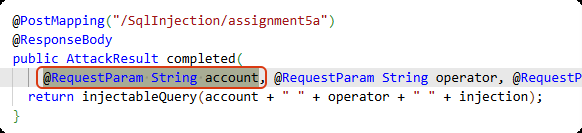
枚举入参的信息:
import java
import semmle.code.java.dataflow.FlowSources

from ApiSourceNode node
select node.asParameter(),  node.asParameter().getType(), node.asParameter().getName()
包括asParameter、参数的类型以及参数名
枚举Node对应的Method
import java
import semmle.code.java.dataflow.FlowSources

from ApiSourceNode node, Method method
where method = node.getEnclosingCallable()
select method
枚举属于Controller且属于node的部分
import java
import semmle.code.java.dataflow.FlowSources


private class Mapping extends Annotation{
    //出现额外mapping注解在此补充,类似注解只能出现在方法上面
    Mapping(){
        this.getType().getQualifiedName() in
        ["org.springframework.web.bind.annotation.PostMapping",
            "org.springframework.web.bind.annotation.RequestMapping",
            "org.springframework.web.bind.annotation.GetMapping",
            "org.springframework.web.bind.annotation.PutMapping",
            "org.springframework.web.bind.annotation.DeleteMapping",
            "org.springframework.web.bind.annotation.PatchMapping"]
    }
}

from ApiSourceNode node, Method m
where m = node.getEnclosingCallable() and
  exists(Mapping mapping | m = mapping.getParent())
select m
枚举属于node但不属于Controller的部分
以下代码实际起不到筛选作用:
import java
import semmle.code.java.dataflow.FlowSources


private class Mapping extends Annotation{
    //出现额外mapping注解在此补充,类似注解只能出现在方法上面
    Mapping(){
        this.getType().getQualifiedName() in
        ["org.springframework.web.bind.annotation.PostMapping",
            "org.springframework.web.bind.annotation.RequestMapping",
            "org.springframework.web.bind.annotation.GetMapping",
            "org.springframework.web.bind.annotation.PutMapping",
            "org.springframework.web.bind.annotation.DeleteMapping",
            "org.springframework.web.bind.annotation.PatchMapping"]
    }
}

from ApiSourceNode node, Method m
where m = node.getEnclosingCallable() and
  not exists(Mapping mapping | m = mapping.getParent())
select m
枚举属于Controller中但不属于node的部分
import java
import semmle.code.java.dataflow.FlowSources


private class Mapping extends Annotation{
    //出现额外mapping注解在此补充,类似注解只能出现在方法上面
    Mapping(){
        this.getType().getQualifiedName() in
        ["org.springframework.web.bind.annotation.PostMapping",
            "org.springframework.web.bind.annotation.RequestMapping",
            "org.springframework.web.bind.annotation.GetMapping",
            "org.springframework.web.bind.annotation.PutMapping",
            "org.springframework.web.bind.annotation.DeleteMapping",
            "org.springframework.web.bind.annotation.PatchMapping"]
    }
}

from Mapping mapping , Method m
where m = mapping.getParent() and not exists(ApiSourceNode node | m = node.getEnclosingCallable())
select m
不受信任的源
-
来自Controller url mapping的各类型入参
-
来自AOP切面查询的不可信输入,因为AOP可以通过JoinPoint获取目标方法的参数等信息,只要参数来自外部就是不可信输入,场景可能比较复杂,因为AOP不一定只通过包名和方法名来匹配,也有可能通过正则进行匹配,所以最好的方法是搜索AOP中的
@Pointcut注解,这个注解定义要拦截处理的方法范围(todo:如果遇到类似场景可以写一些ql) -
来自jdbc的输入
-
来自本地文件的输入(如
System.getProperty, FileInputStream) -
来自命令行的输入
优化ql
优化ql的目的是为了解决规则设置过于宽泛导致大量误报的问题
isSanitizer限制污点流
sanitizer(净化函数)是指在漏洞链条中,若存在一个方法阻断了污染数据的传递链,那么这个方法就是sanitizer,例如某处使用一个安全函数做了过滤,这个时候就可以使用isSanitizer来规避使用了安全函数的数据流(下列代码中的安全函数是xssEncode)
override predicate isSanitizer(DataFlow::Node node) {
        exists(Call call|
            node.asExpr() = call and
            call.getCallee().hasName("xssEncode")
        )
        //认为在某个节点调用了xssEncode及污点数据被洗白
    }
isAdditionalTaintStep强制关联特定节点
CodeQL进行代码分析时,只会分析用户的代码,对于第三方包的方法调用被将认为是不可预测的,导致数据流被截断,因此就需要自己定义isAdditionalTaintStep
默认将所有函数调用都当成会传播污点的:
override predicate isAdditionalTaintStep(DataFlow::Node node1, DataFlow::Node node2) {
        exists(Call call |
            node2.asExpr()=call and
            call.getAnArgument()=node1.asExpr()
        )
    }
对项目进行模块划分
对项目进行模块划分,针对关键模块和安全敏感区域进行重点审计,减少整体分析范围。对于第三方库,可查看是否有针对性的 CodeQL 库或规则集,或者将其排除在扫描范围外,只关注项目的业务代码部分。对于测试目录也应当排除在扫描范围外
标准库
https://codeql.github.com/codeql-standard-libraries/java/
现有查询ql参考
https://codeql.github.com/codeql-query-help/java/
示例
获取spring映射url
//梳理spring接口
import java
import semmle.code.java.Annotation

private class Controller extends Annotation{
    //出现额外Controller注解在此补充,类似注解只能出现在类上面
     Controller(){
        this.getType().getQualifiedName() in [
            "org.springframework.web.bind.annotation.RestController",
            "org.springframework.web.bind.annotation.Controller",
            "org.springframework.stereotype.Controller",
            // "org.springframework.web.bind.annotation.RequestMapping" # 注意特殊场景:即定义在RequestMapping上而非Controller上
        ]
     }


     string getPath(){
        if exists(this.getStringValue("value"))
        then result =this.getStringValue("value")
        else (
            if exists(this.getStringValue("path"))
            then result = this.getStringValue("path")
            else result = ""
            )
     }
}

private class Mapping extends Annotation{
    //出现额外mapping注解在此补充,类似注解只能出现在方法上面
    Mapping(){
        this.getType().getQualifiedName() in
        ["org.springframework.web.bind.annotation.PostMapping",
            "org.springframework.web.bind.annotation.RequestMapping",
            "org.springframework.web.bind.annotation.GetMapping",
            "org.springframework.web.bind.annotation.PutMapping",
            "org.springframework.web.bind.annotation.DeleteMapping",
            "org.springframework.web.bind.annotation.PatchMapping"]
    }

    //获取注解指定参数的值,这个值可能是字符串也可能是array,因此通过Expr返回
    //可以尝试获取value(path)、params、consumes、produces、method
    Expr getAnnotationValue(string name){
        result = this.getValue(name)
    }

}

private class MyClass extends Class{
    MyClass(){
        exists(Class clazz |  this = clazz)
    }

    string getController(){
        exists(Controller controller| this = controller.getParent() and result = controller.getPath())
    }


}

private class MyMethod extends Method{
    MyMethod(){
        exists(Method method |  this = method)
    }

    //由于映射的url可能存在多个,即可能为数组,因此返回Expr
    Expr getUrlMappingExpr(){
        exists(Mapping mapping|
            mapping.getParent()=this
        and(
            if exists(mapping.getAnnotationValue("value"))
            then result = mapping.getAnnotationValue("value")
            else result = mapping.getAnnotationValue("path"))
        )
    }
}

from MyClass clazz, MyMethod method
where clazz = method.getDeclaringType()
select clazz, clazz.getController(), method, method.getUrlMappingExpr()
方法追踪
import java


from MethodCall m
where m.getMethod().toString()="parse" or m.getMethod().toString()="parseObject"
select m.getCaller(),m.getParent(),m.getArgument(0)
这是一个最简单的定位fastjson解析对象位置的一个ql文件
| # | [0] | [1] | [2] |
|---|---|---|---|
| 1 | main | parse(…) | js |
| 2 | main | parseObject(…) | payload |
- 第一列:调用该方法的函数位置
- 第二列:被调用方法所处位置
- 第三列:方法的第一个入参
本地数据流
import java
import semmle.code.java.dataflow.DataFlow

from Constructor school, Call call, Expr src
where
 school.getDeclaringType().hasQualifiedName("com.example.demo.entity", "School") and
  call.getCallee() = school and
  DataFlow::localFlow(DataFlow::exprNode(src), DataFlow::exprNode(call.getArgument(0)))
select src
明确要分析的是com.example.demo.entity.School类的构造函数,有关DataFlow部分的含义则是存在从源表达式(src)到构造函数第一个参数(call.getArgument(0))的局部数据流。简化一下:
import java
import semmle.code.java.dataflow.DataFlow

from Call call, Expr src
where
  DataFlow::localFlow(DataFlow::exprNode(src), DataFlow::exprNode(call.getArgument(0)))
select src, call.getArgument(0)
如果代码是:
public static void main(String[] args) {
        String[] a = new String[]{"attachment1.pdf", "attachment1.exe", "attachment1.exe", "attachment2.exe", "attachment1.pdf"};
        FileValidateAndCalculate(a);

    }
则src(表达式)是new String[]{"attachment1.pdf", "attachment1.exe", "attachment1.exe", "attachment2.exe", "attachment1.pdf"};,call.getArgument(0)是FileValidateAndCalculate(a)中的a,简而言之,该ql在追踪局部变量a,但由于是在追踪所有被调用函数的第一个入参,因此需要做一些限制来简化结果。
fastjson(局部污点追踪)
import java
import semmle.code.java.dataflow.DataFlow
import semmle.code.java.dataflow.TaintTracking
import semmle.code.java.StringFormat

from MethodCall call, Expr src, Parameter p
where call.getMethod().toString() in ["parse", "parseObject" ] and
DataFlow::localFlow(DataFlow::exprNode(src), DataFlow::exprNode(call.getArgument(0)))
and TaintTracking::localTaint(DataFlow::parameterNode(p), DataFlow::exprNode(call.getArgument(0)))
select p as input, call.getParent() as expr, call.getArgument(0) as sink
p是危险函数入参,expr是注入点所在表达式,call.getArgument(0)为注入点
原生sql注入(全局污点追踪)
/**
 * @name 原生sql注入
 * @description 使用jdbc进行sql语句的执行,由于构造sql时传入不可信数据导致问题存在.
 * @kind path-problem
 * @id java/sqli-jdbc
 * @problem.severity error
 * @security-severity 9.2
 * @precision high
 * @tags security
 */

import java
import semmle.code.java.dataflow.TaintTracking
import semmle.code.java.security.PathSanitizer
private import semmle.code.java.dataflow.ExternalFlow
private import semmle.code.java.dataflow.FlowSources
private import semmle.code.java.security.Sanitizers

private class Mapping extends Annotation{
    //出现额外mapping注解在此补充,类似注解只能出现在方法上面
    Mapping(){
        this.getType().getQualifiedName() in
        ["org.springframework.web.bind.annotation.PostMapping",
            "org.springframework.web.bind.annotation.RequestMapping",
            "org.springframework.web.bind.annotation.GetMapping",
            "org.springframework.web.bind.annotation.PutMapping",
            "org.springframework.web.bind.annotation.DeleteMapping",
            "org.springframework.web.bind.annotation.PatchMapping"]
    }
}

private class SqliSource extends DataFlow::Node{
  SqliSource()  {
    exists(Method m | m = this.getEnclosingCallable() and
  exists(Mapping mapping | m = mapping.getParent()))
  }
}

private class SqliSink extends DataFlow::Node {
    SqliSink(){
        exists(MethodCall call|(call.getMethod().getDeclaringType().hasQualifiedName("java.sql", "Statement")
or call.getMethod().getDeclaringType().hasQualifiedName("java.sql", "Connection") ) and
        call.getMethod().toString()in["executeQuery", "executeUpdate","execute", "prepareStatement"]
        and this.asExpr() = call.getArgument(0))
    }

}

module SqlJdbcConfig implements DataFlow::ConfigSig {
  predicate isSource(DataFlow::Node source) { source instanceof SqliSource  }

  predicate isSink(DataFlow::Node sink) { sink instanceof SqliSink }

}


module SqlJdbcFlow = TaintTracking::Global<SqlJdbcConfig>;
// module SqlJdbcFlow = DataFlow::Global<SqlJdbcConfig>;
import SqlJdbcFlow::PathGraph

from SqlJdbcFlow::PathNode source, SqlJdbcFlow::PathNode sink
where SqlJdbcFlow::flowPath(source, sink)
select sink.getNode(), source, sink, "sql-injection"
参考
-
https://codeql.github.com/docs/ql-language-reference/types/#defining-a-class
-
https://geekdaxue.co/read/loulan-b47wt@rc30f7/kgidug